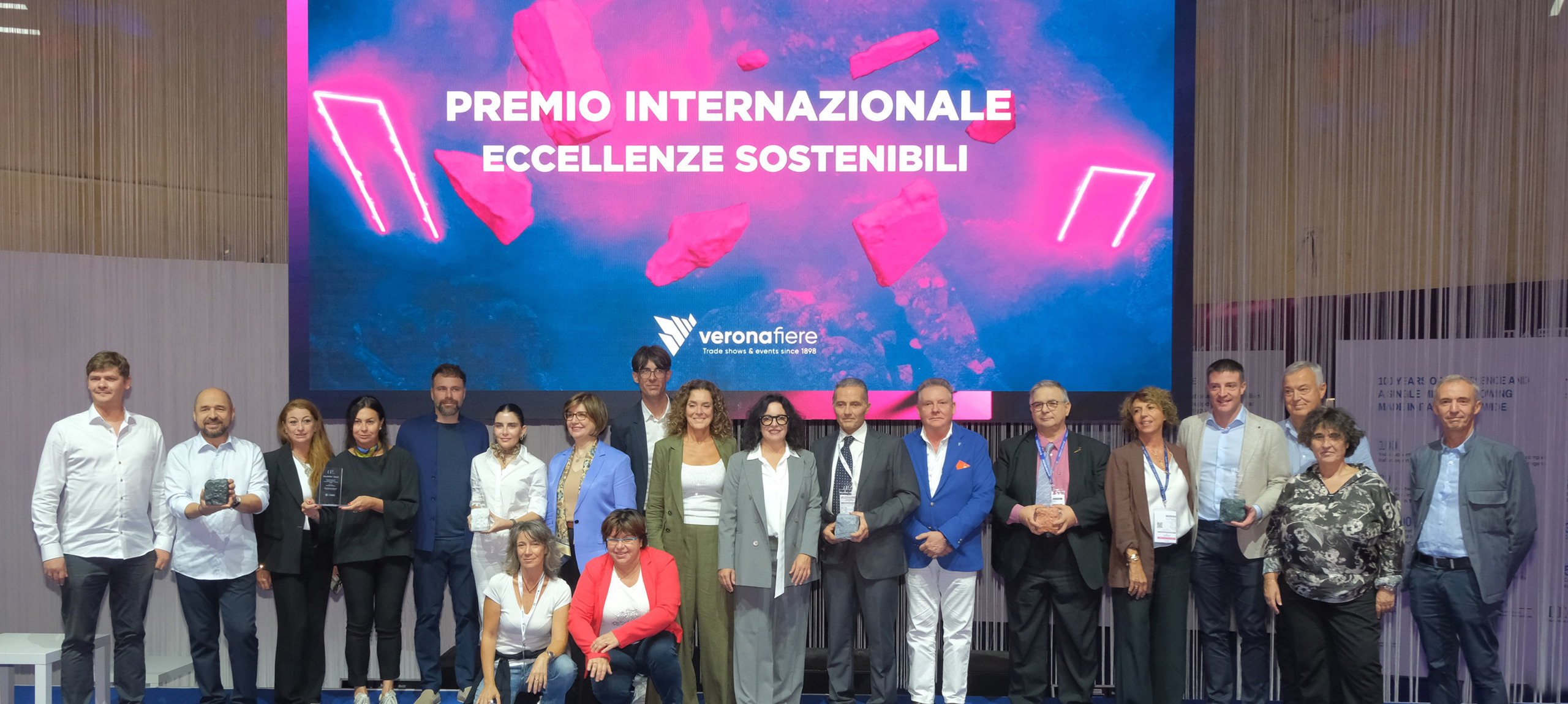
International Award for Sustainable Excellence
Discover the 2026 International Award for Sustainable Excellence
Discover the winning companies:
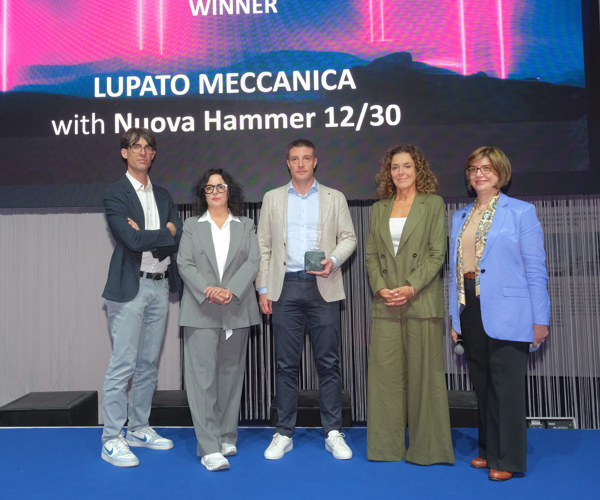
Innovative tools and equipment for the stone industry, either new or significantly improved. Entries were evaluated based on performance, efficiency, safety, ergonomics and environmental impact.
WINNER
- LUPPATO MECCANICA with Nuova Hammer 12/30
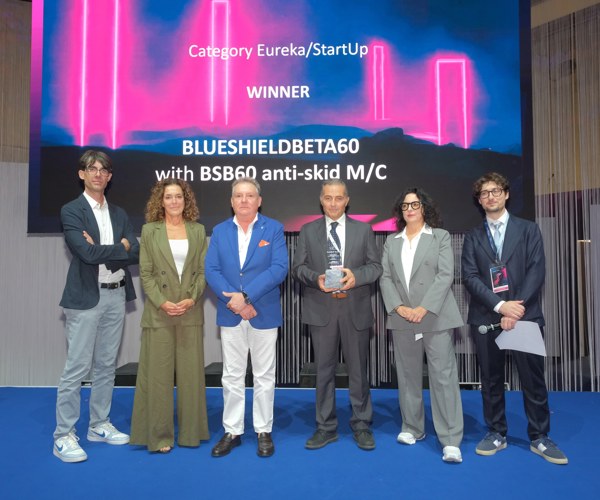
Innovative projects, concepts and solutions developed by startups and emerging companies. Entries were evaluated based on innovation potential, sustainability, feasibility, and their contribution to the circular economy and the transformation of the industry.
WINNER
- BLUESHIELDBETA60 with BSB60 anti-skid M/C
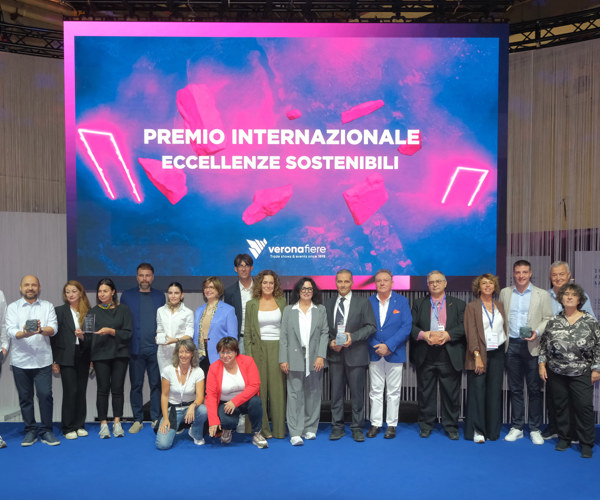
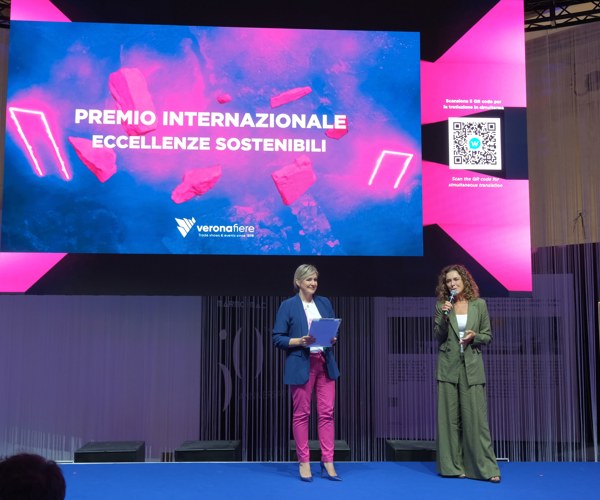
The Award is divided into five categories:
New-generation technologies and plants or significant developments of existing solutions, presented for the first time in 2026 or during the event. Assessed on innovation, energy efficiency, safety, ergonomics and sustainability.
Innovative tools and equipment for the stone industry, either new or significantly improved. Assessed on performance, efficiency, safety, ergonomics and environmental impact.
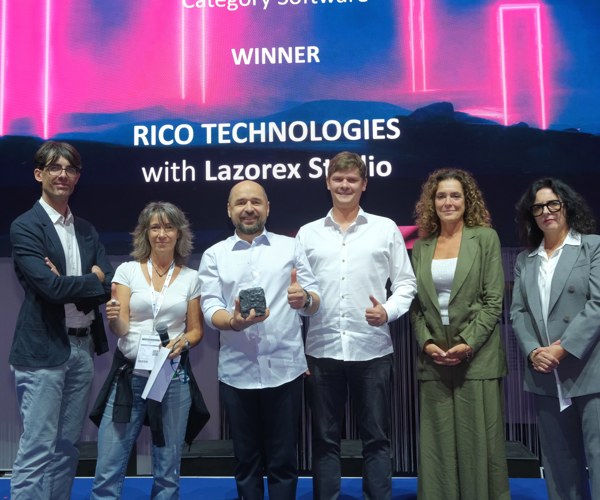
Innovative digital and software solutions for the stone supply chain. Assessed on their ability to optimise processes, improve operational efficiency, integrate technologies and reduce environmental impact.
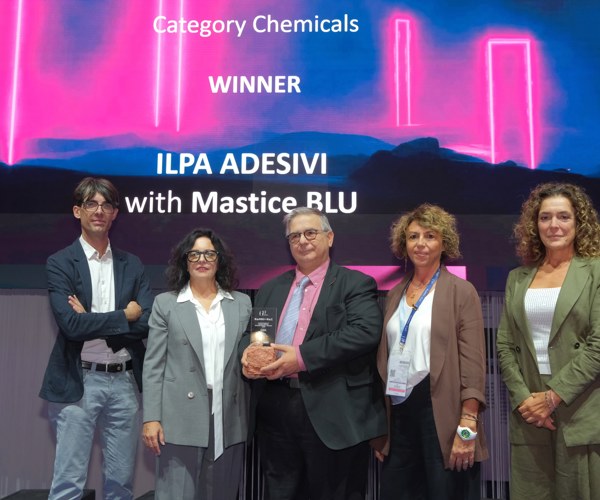
Chemical products and solutions for stone processing with an innovative and sustainable approach. Assessed on effectiveness, safety, environmental sustainability and reduced impact in production processes.
Innovative projects, concepts and solutions from startups and emerging companies. Assessed on innovation potential, sustainability, feasibility and contribution to the circular economy and the transformation of the sector.
Essential Requirements
The Jury:
University of Turin
Mining engineer and researcher at the Department of Earth Sciences of the University of Turin, Giovanna Antonella Dino specialises in the sustainable management of geo-resources, the circular economy, and the valorisation of mineral raw materials. Her research focuses on the recovery of extractive waste, critical raw materials, the sustainability of mining supply chains, and material reuse.
Head of the Mineral Dressing and Sampling Laboratory at the University of Turin, she is involved in numerous European projects dedicated to the ecological transition and the sustainable supply of resources. She is the author of an extensive body of scientific publications and collaborates with institutions, companies and international research centres.
University of Salamanca (Spain)
Geologist and lecturer at the University of Salamanca, Professor Dolores Pereira Gómez is an internationally recognised authority in the study of natural stone, geological heritage, and the conservation of stone materials used in historic architecture. Her research integrates geology, sustainability, and the enhancement of cultural heritage, with a particular focus on the role of natural stone in the history of territories and communities.
She has participated in numerous international scientific programmes and has played a leading role in initiatives promoted by the International Union of Geological Sciences (IUGS) for the recognition of Heritage Stones, stones that have contributed to the development of the world’s architectural heritage. She is the author of hundreds of scientific and outreach publications.
Designer
Designer and researcher, Raffaello Galiotto is internationally recognised for his pioneering work at the intersection of design, technological innovation and natural stone. His research explores the expressive potential of marble through the use of advanced digital fabrication technologies, helping to redefine the relationship between material, design and production processes.
Author of publications and theoretical contributions on stone design, he has taught Design at the University of Ferrara and collaborates with international companies and institutions in the development of new languages applied to architecture and contemporary design.
His works have been exhibited at major design events and cultural venues dedicated to design and materials.
Mining Engineer
Mining engineer and consultant specialising in the sustainable management of natural resources, Claudia Chiappino works in the fields of quarry and mine design and management, sustainable development, and the valorisation of raw materials.
An expert in Life Cycle Assessment (LCA), Environmental Product Declarations (EPD), and innovation in stone and industrial materials, she provides research and consultancy services to companies, public bodies and industry associations.
She collaborates with leading Italian universities active in the fields of mining and geological sciences, contributing to the development of production models focused on sustainability, the circular economy, and the reduction of the environmental impact of extractive activities.
Jury Coordinators:
Full Professor at the University of Verona, Marco Cristani is one of Italy’s leading experts in artificial intelligence, machine learning and computer vision. His research focuses on the development of intelligent systems for the automated analysis of images, videos and complex data, with applications ranging from industry to healthcare.
He coordinates national and international projects dedicated to digital innovation and technology transfer and is the author of numerous scientific publications. His expertise contributes to the integration of artificial intelligence technologies into evaluation and decision-support processes.
University of Verona
Researcher at the Department of Engineering for Innovation Medicine at the University of Verona, Eros Radicchi conducts research in the fields of data analysis, artificial intelligence and digital technologies applied to complex processes.
His work focuses on the development of advanced tools for information processing and decision support, adopting an interdisciplinary approach that combines scientific research with practical applications. He collaborates on innovative projects dedicated to digitalisation and the use of emerging technologies in industrial, scientific and organisational contexts.
Director of IS.I.M. – International Marble Institute
Engineer, President of IS.I.M. – International Marble Institute, Paolo Marone is one of Italy’s leading experts in technology, standardisation and innovation for the natural stone sector.
For many years, he has promoted applied research, technology transfer and the development of international standards to support companies across the natural stone supply chain. His work focuses on material performance, production processes, sustainability and the technological evolution of the industry.
A speaker at numerous specialist conferences, he serves as a key link between scientific research, industry and the market.