Shilaya Cottage in India: stone salvaged from a colonial ruin becomes a home
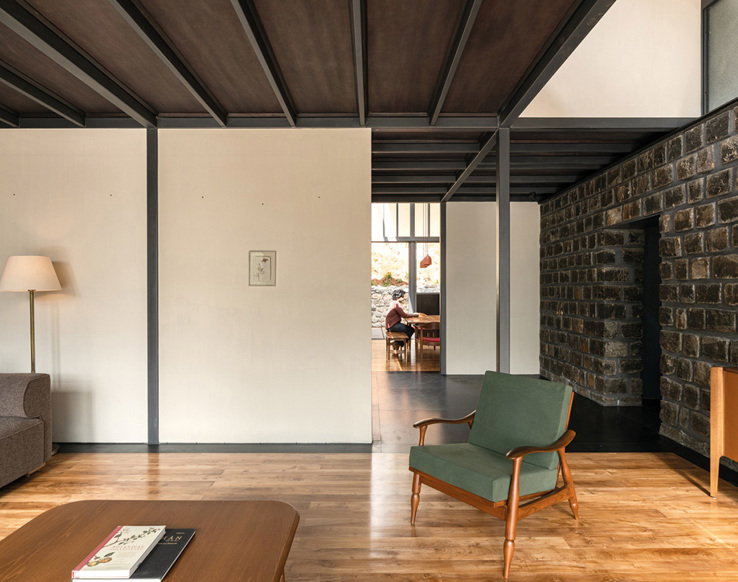
Shilaya Cottage is a residential project by Indian studio Meister Varma Architects, built in Kotagiri, India, and completed in 2025. The house reuses stone salvaged from a collapsed colonial cottage, in a project that unites historical memory and sustainability.
the context: a collapsed colonial house in Kotagiri
Kotagiri, a hill town in southern India once home to numerous British colonial residences, still preserves several historic buildings in a state of decay or abandonment today. Shilaya Cottage emerged from the partial collapse of one such building, an event that could have meant the definitive loss of the site but was instead turned into a design opportunity.
why new stone could not be used
Faced with the collapse of the pre-existing structure, the design team chose to salvage stone from the original building rather than source new material, both for sustainability reasons and to preserve the symbolic and material link between the new construction and the site's history.
Transporting new stone to a hill location like Kotagiri would also have involved significant logistical costs, a further factor that made reusing the existing stone as sustainable a choice as it was economically sound.
reusing stone for foundations and walls
The stone salvaged from the collapse was used in the construction of the new foundations and part of the perimeter walls, in a process that required manually selecting reusable blocks and carefully planning their placement within the new structure.
This selection phase took longer than working with new, uniform material would have, since each salvaged block had different dimensions, shape, and state of preservation, requiring a case-by-case adaptation of the masonry composition rather than the application of a standardized construction scheme.
the contrast between historic stone and a lightweight steel structure
Alongside the salvaged stone, used for the most massive and load-bearing elements, the project pairs a lightweight steel structure for the upper portions of the building, creating a contrast between the solidity of the historic base and the lightness of the added contemporary elements.
This structural choice also helped limit the overall load bearing on the salvaged stone foundations, avoiding subjecting a reused material - whose mechanical characteristics are not always uniform - to excessive stress.
a sustainability lesson for the natural stone industry
Shilaya Cottage represents an exemplary case of how the construction sector, and the natural stone industry in particular, can approach sustainability not only through new technologies but also by recovering and valorizing resources already present on site, reducing the need for new extraction.
This approach fits within a broader trend affecting the construction sector internationally, where reclaiming materials from demolitions and collapses is increasingly seen as a primary source of supply, rather than an exception limited to niche projects with a strong environmental focus.
Photo Credits: Jaquar Artize, Kajaria ceramics, Vitrum - archdaily.com