Cerdeiras House Hotel: portuguese stone in the service of hospitality
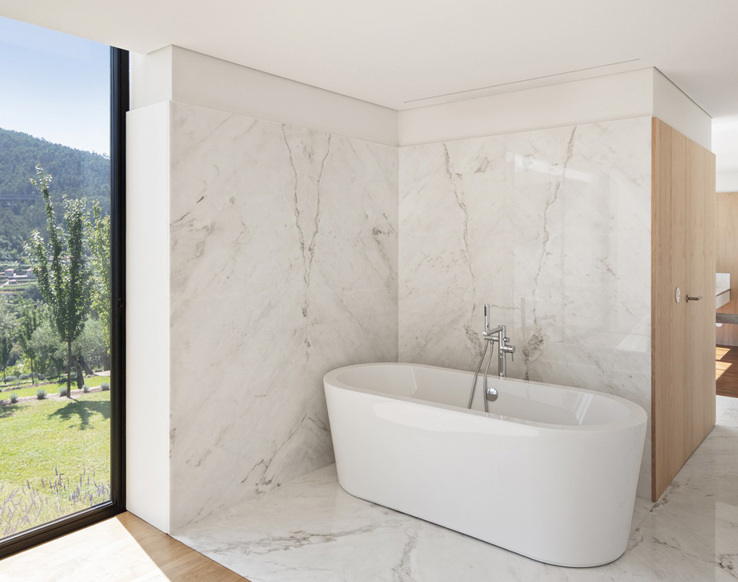
Cerdeiras House Hotel is a hospitality project by Portuguese studio Tiago do Vale Arquitectos, built in Labruja, Portugal, and completed in 2025. The intervention transforms a rural house into a boutique hotel, showcasing local stone on the facade and throughout the interiors.
the project: from rural house to boutique Hotel
Cerdeiras House Hotel arose from the conversion of a traditional rural home in the Minho region of northern Portugal, transformed into a small hospitality venue designed for experiential tourism rooted in the territory and its architectural identity.
The Minho region, in Portugal's green and mountainous north, has a long tradition of granite and schist rural architecture, with small stone houses historically built to withstand a wet, temperate climate. Converting one of these structures into a hotel required careful structural assessment of the existing stone walls, many of which had stood for generations without modern reinforcement, before the design team could safely open up new circulation routes and guest accommodations within the original footprint.
local stone in the facade and interiors
The project preserves and showcases the original Portuguese stone of the rural building, integrating it with contemporary interventions both on the facade and throughout the interior spaces. Choosing to leave the existing stone masonry exposed, rather than covering or concealing it, preserves the material memory of the original building.
hospitality and natural materials: a winning combination
In contemporary hospitality, the presence of authentic natural materials such as local stone is increasingly a distinguishing factor able to convey identity and authenticity to guests, in a market where the stay experience is closely tied to the perceived genuineness of the place.
This trend is particularly visible in the boutique and small-format hotel segment, where guests actively seek out properties that feel distinct from international chain standards, often researching materials, architects, and renovation stories before booking. For independent hospitality operators, a well-documented material story - such as the reuse of centuries-old stone walls - can become as much a part of the marketing narrative as the amenities themselves.
the role of stone in guests' perception of quality
Exposed stone, with its irregularities and natural texture, immediately conveys to guests a sense of craftsmanship and connection to the territory - qualities increasingly sought after by travelers who favor authentic experiences over standardized, characterless facilities.
what italian hospitality operators can learn
The case of Cerdeiras House Hotel offers an interesting takeaway for Italian rural hospitality operators - agriturismi and countryside boutique hotels among them - a sector where local stone can serve as a similarly distinctive element, capable of enhancing existing structures without compromising their original identity.
Beyond the aesthetic appeal, working with existing stone structures also tends to lower embodied carbon compared to new construction, an increasingly relevant consideration for hospitality brands seeking to align their expansion plans with sustainability commitments demanded by both regulators and environmentally conscious travelers.
Photo Credits: João Morgado - archdaily.com